Which of These Conditions Is Most Closely Linked to ACEs?
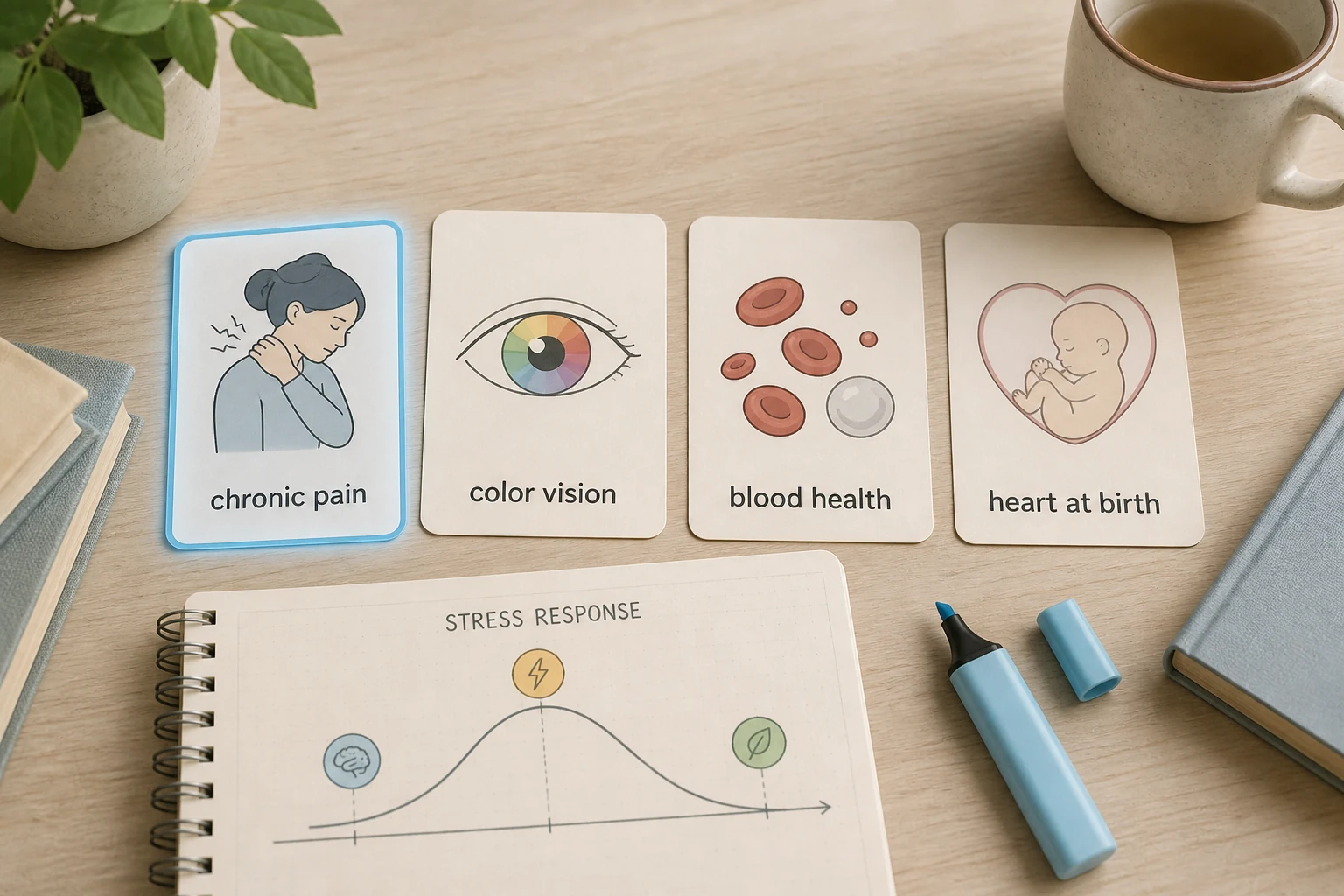
If you are answering the question "which of these conditions is most closely linked to ACEs" and the options include colorblindness, anemia, congenital heart defect, and chronic pain, the best answer is chronic pain. ACEs, or adverse childhood experiences, are not usually discussed as causes of inherited traits or birth defects. They are more closely studied as early stress exposures that can shape the nervous system, stress response, health behaviors, relationships, and long-term risk patterns.
That answer still needs context. ACEs do not mean a person will develop chronic pain, and chronic pain has many possible contributors. The point is that ACE research has found stronger links between childhood adversity and later pain-related or stress-related health problems than between ACEs and conditions that are primarily genetic, present at birth, or unrelated to childhood environment. For a private way to reflect on your own background, ACETest.me offers a private ACE score reflection that frames the score as a starting point, not a label.
Why Chronic Pain Is the Best Answer
Chronic pain is the most closely linked choice because it can be influenced by long-term stress physiology, trauma exposure, sleep disruption, mood patterns, inflammation, and nervous system sensitivity. ACEs are commonly described as childhood experiences such as abuse, neglect, violence exposure, caregiver substance use, household mental health problems, parental separation, or incarceration in the home. These experiences can increase the chance that a child's stress response stays activated for too long or too often.
Over time, repeated stress activation may affect how the body interprets threat, discomfort, and recovery. This does not make pain "all in your head." Pain is real, and chronic pain can involve muscles, joints, nerves, immune pathways, hormones, injuries, medical conditions, and emotional stress all at once. The ACE connection matters because it helps explain why some people with childhood adversity may carry a more sensitized body into adulthood.
The other answer choices are different in kind. Colorblindness is usually inherited. A congenital heart defect is present at birth. Anemia may be related to iron levels, blood loss, chronic illness, nutrition, genetics, or other medical causes. These conditions can affect anyone, including people with ACE histories, but they are not the classic ACE-linked answer in a trauma-informed health education question.
What ACEs Mean in Health Research
ACEs stands for adverse childhood experiences. In the original ACE framework, the score counted categories of abuse, neglect, and household dysfunction before age 18. Modern discussions may also consider community violence, discrimination, poverty-related stress, bullying, foster care disruption, or other forms of instability, although not every expanded experience appears in the standard 10-item ACE score.
The ACE score is best understood as a population-level risk indicator. In groups of people, higher ACE exposure tends to be associated with higher rates of certain adult health concerns, including chronic health problems, mental health concerns, substance misuse, and social or educational challenges. For an individual person, the score cannot explain everything. It cannot capture timing, severity, culture, protective relationships, therapy, personal strengths, medical history, or what happened after childhood.
That is why a gentle ACE screening tool should be used for education and self-reflection rather than as a final answer about someone's health. A score can help organize a conversation. It should not replace care from a qualified professional when symptoms are serious, confusing, or getting worse.
How ACEs May Become Linked With Pain
Researchers often describe several pathways that may connect adverse childhood experiences with chronic pain. None of these pathways is a single simple cause. They are overlapping routes that can make the body more vulnerable.
Stress Response Sensitization
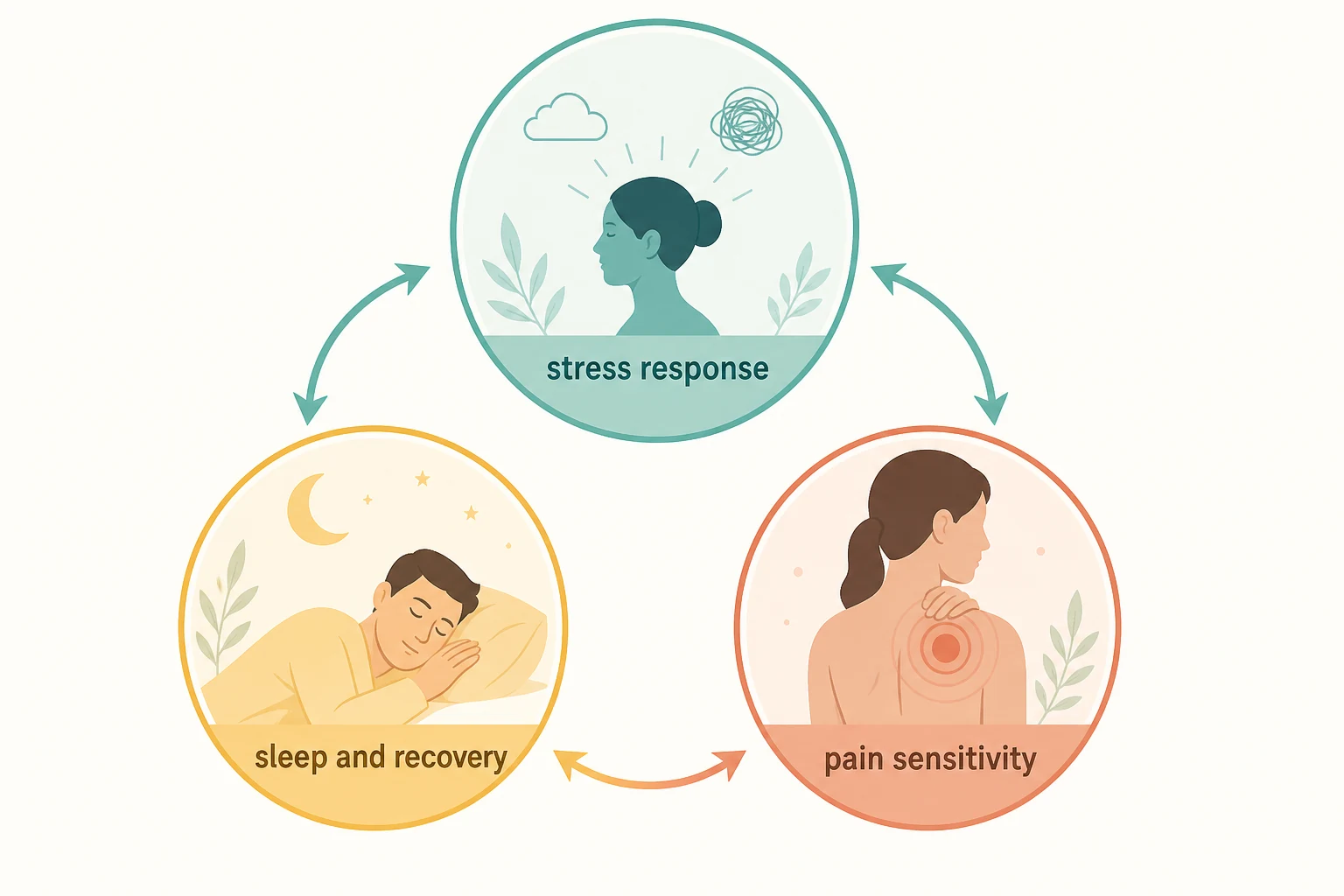
When a child faces ongoing threat without enough protective support, the body may learn to stay alert. The stress system is designed to help a person survive danger, but it can become costly when it is activated repeatedly. In adulthood, that heightened alertness may show up as muscle tension, sleep problems, headaches, gastrointestinal discomfort, fatigue, or increased sensitivity to pain.
Brain and Nervous System Learning
Pain is processed through the nervous system. Early adversity can influence how the brain learns safety, danger, and body signals. Some people become more likely to notice and amplify pain signals, especially during stress. This does not mean they are exaggerating. It means the nervous system may be doing exactly what it learned to do: scan, protect, and respond quickly.
Inflammation, Sleep, and Recovery
Chronic stress can interact with immune function, inflammation, and sleep. Poor sleep can lower pain tolerance. Inflammation can contribute to aches or flare-ups. Stress-related exhaustion can make exercise, medical follow-up, nutrition, and social connection harder to maintain. These small loops can accumulate.
Health Behaviors and Access to Care
ACEs can also shape adult routines. A person who grew up without safety or support may struggle with trust, appointments, rest, movement, or asking for help. Some may use alcohol, substances, food, overwork, or isolation to manage stress. These coping patterns often make sense in context, but they can also increase pain risk or make pain harder to manage.
What "4 or More ACEs Is Associated With" Really Means
Searchers often ask what 4 or more ACEs is associated with because many ACE summaries use that threshold. In research, four or more ACE categories often mark a group with higher average risk for several outcomes compared with people reporting no ACEs. Those outcomes may include depression, heart disease, substance misuse, respiratory disease, diabetes, chronic pain, and other concerns.
But the phrase "associated with" is doing important work. It does not mean every person with an ACE score of 4, 5, 6, or 7 will have the same future. It also does not mean ACEs are the only explanation for a health condition. Association means two things appear together more often in data than would be expected by chance, after researchers account for certain factors. It does not erase personal variation.
If you have a high ACE score, the most useful response is not panic. It is curiosity plus support. Your score can suggest that stress biology, coping strategies, relationships, medical care, and protective experiences deserve attention. It can also help you decide what to discuss with a doctor, therapist, counselor, or trusted support person.
Why the Other Options Are Less Closely Linked
The wrong options help clarify the logic of the ACE question.
Colorblindness is most often related to inherited differences in color vision. ACEs may shape stress, development, and health risk, but they do not explain the usual biology of colorblindness.
Anemia means the body does not have enough healthy red blood cells or hemoglobin for normal oxygen transport. It may come from iron deficiency, vitamin deficiency, chronic disease, blood loss, pregnancy, inherited blood conditions, or other medical reasons. Childhood adversity may indirectly affect nutrition or care access in some lives, but anemia is not the best answer to a direct ACE linkage question.
A congenital heart defect is a structural heart difference present from birth. ACE research does include cardiovascular disease risk later in life, but that is different from a congenital defect. When an education question asks which condition is most closely linked to ACEs, chronic pain fits the trauma-stress pathway more directly than a birth-related structural condition.
How to Use the Answer in a Trauma-Informed Way
The clean test-style answer is chronic pain. The trauma-informed answer is more humane: chronic pain is one possible long-term health concern that has been associated with ACE exposure, but no single score defines a person or explains every symptom.
If you are learning this for a class, training, or workplace module, remember three points. First, ACEs are about experiences before age 18 that may threaten safety, stability, or bonding. Second, the ACE score helps describe cumulative exposure, not personal worth or destiny. Third, positive childhood experiences, supportive adult relationships, trauma-informed care, stable routines, and appropriate medical or mental health support can change the story.
For adults reflecting on their own score, it can help to write down both sides of the picture: what happened, and what helped you keep going. Many people with ACE histories also carry persistence, empathy, pattern recognition, humor, creativity, or a strong protective instinct toward others. Those strengths do not make the adversity okay, but they matter.

Using an ACE Score Without Letting It Define You
The question "which of these conditions is most closely linked to ACEs" is useful because it points to a broader lesson: childhood adversity can live in the body, not only in memory. Chronic pain is the strongest answer among the listed choices because pain can be shaped by stress response, nervous system learning, sleep, inflammation, coping, and care access.
Still, ACEs are only one part of a full picture. A person with chronic pain deserves medical attention that looks for physical causes, practical treatment options, and whole-person support. A person with a high ACE score deserves understanding without being reduced to a number. If you want a calm place to organize that reflection, an ACE self-exploration resource can help you put the score in context before deciding whether to bring it into a professional conversation.
FAQ
Which condition is most closely linked to ACEs?
Among colorblindness, anemia, congenital heart defect, and chronic pain, chronic pain is the best answer. ACEs are more closely associated with stress-related, pain-related, behavioral, and long-term health risk patterns than with inherited color vision differences or structural heart conditions present at birth.
What does ACE stand for?
ACE stands for adverse childhood experience. ACEs are potentially traumatic or destabilizing experiences before age 18, often involving abuse, neglect, violence exposure, or household challenges that affect safety, stability, or bonding.
What is an ACE score?
An ACE score is a count of ACE categories a person reports from childhood. A higher number can indicate higher exposure to adversity, but it is not a complete life history and should not be treated as a final explanation for health, personality, or future outcomes.
Is chronic pain always caused by ACE trauma?
No. Chronic pain can have many causes, including injury, illness, nerve changes, inflammation, genetics, posture, sleep disruption, stress, and other factors. ACEs may be one relevant part of the picture for some people, but pain should be evaluated with appropriate professional care.
Who is most at risk for ACEs?
No child is at fault for ACEs. Risk can increase when families face violence, caregiver substance misuse, untreated mental health problems, social isolation, poverty-related stress, discrimination, unsafe neighborhoods, or unstable housing. Protective relationships and supportive communities can reduce risk and buffer harm.
What events can lead to ACEs?
Common ACE categories include emotional, physical, or sexual abuse; emotional or physical neglect; witnessing violence at home; caregiver substance use; household mental health problems; parental separation or divorce; and having an incarcerated household member. Some expanded frameworks also include community-level adversity.
Can positive experiences reduce the impact of ACEs?
Positive experiences can help. Safe relationships, predictable routines, belonging, skill-building, therapy, medical care, and supportive communities can buffer stress and support recovery. They do not erase what happened, but they can change how much power it has over daily life.