Childhood Adverse Events and ACEs: A Plain-English Guide to Scores, Impact, and Next Steps
Childhood adverse events can be hard to name because they often sit at the intersection of memory, family context, stress, and survival. In public health and trauma-informed education, many people use the ACE framework to describe adverse childhood experiences before age 18, including abuse, neglect, household instability, and other conditions that can affect a child's sense of safety. If you are trying to understand your own history, a private ACE self-reflection tool can offer a gentle starting point without turning a score into a label.
This guide explains what childhood adverse events usually include, how an adverse childhood experiences questionnaire works, what an ACE score can and cannot mean, and why long-term impact is about risk and support rather than fixed destiny.
What Childhood Adverse Events Mean in the ACE Framework
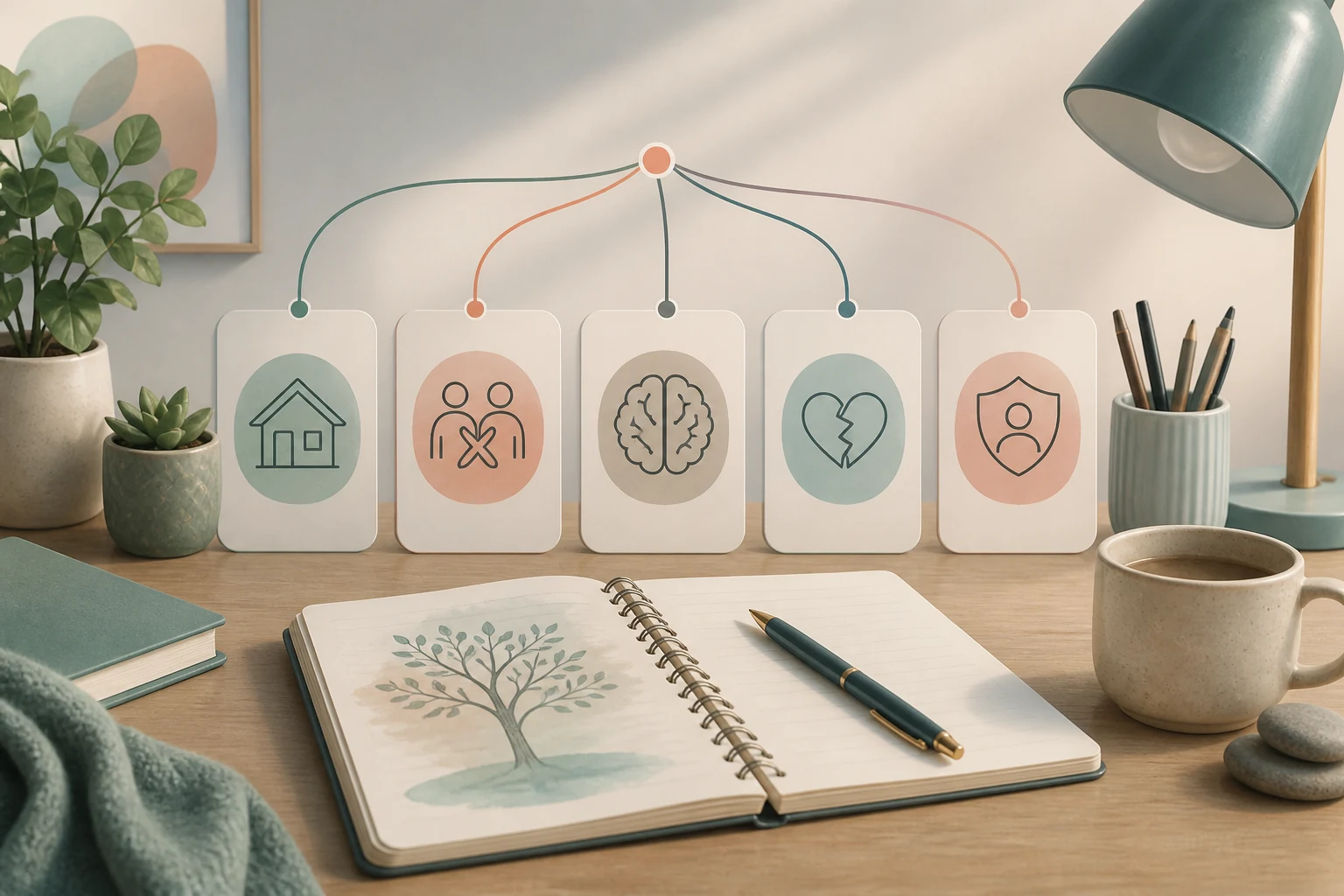
The phrase childhood adverse events is often used by searchers who are looking for adverse childhood experiences, or ACEs. The original ACE framework focused on ten categories of adversity before age 18. They are commonly grouped into abuse, neglect, and household challenges. Abuse can include emotional, physical, or sexual harm. Neglect can include emotional or physical deprivation. Household challenges can include substance use problems, mental health problems, domestic violence, parental separation, or incarceration of a household member.
That list is important, but it is not the full story of childhood adversity. Many trauma-informed discussions also recognize experiences such as bullying, discrimination, unsafe neighborhoods, homelessness, food insecurity, community violence, foster care disruption, and chronic instability. These may not always appear in a classic ACE score, yet they can still shape stress, safety, attachment, and development.
The key idea is not to rank one person's pain against another's. ACE language is a screening and education framework. It helps people notice patterns that may deserve care, context, or professional support. It is not a full biography, a clinical assessment, or a measure of personal worth.
A Short List of Adverse Childhood Experiences
People often ask for a list of adverse childhood experiences because they want to know whether their own history "counts." A practical list usually includes:
- emotional, physical, or sexual abuse
- emotional or physical neglect
- witnessing violence at home
- living with household substance misuse
- living with household mental health problems
- parental separation, divorce, abandonment, or repeated caregiver instability
- having a household member incarcerated
- other chronic threats to safety, stability, food, housing, belonging, or connection
This list should be read with care. A checklist can help organize reflection, but it cannot capture severity, timing, duration, cultural context, available support, or the child's interpretation of what happened.
How Adverse Childhood Experiences Impact Brain Development
One reason childhood adverse events matter is that repeated or intense stress can affect the developing stress-response system. A child who regularly feels unsafe may become highly alert to threat. Over time, that alertness can influence attention, learning, sleep, emotional regulation, and the body's response to later stress.
This is often discussed through the idea of toxic stress. Ordinary stress can be manageable when a child has reliable support. Strong or prolonged stress becomes more harmful when it happens without enough protective relationships or recovery time. The brain and body may adapt in ways that helped the child survive then, even if those patterns feel difficult in adulthood.
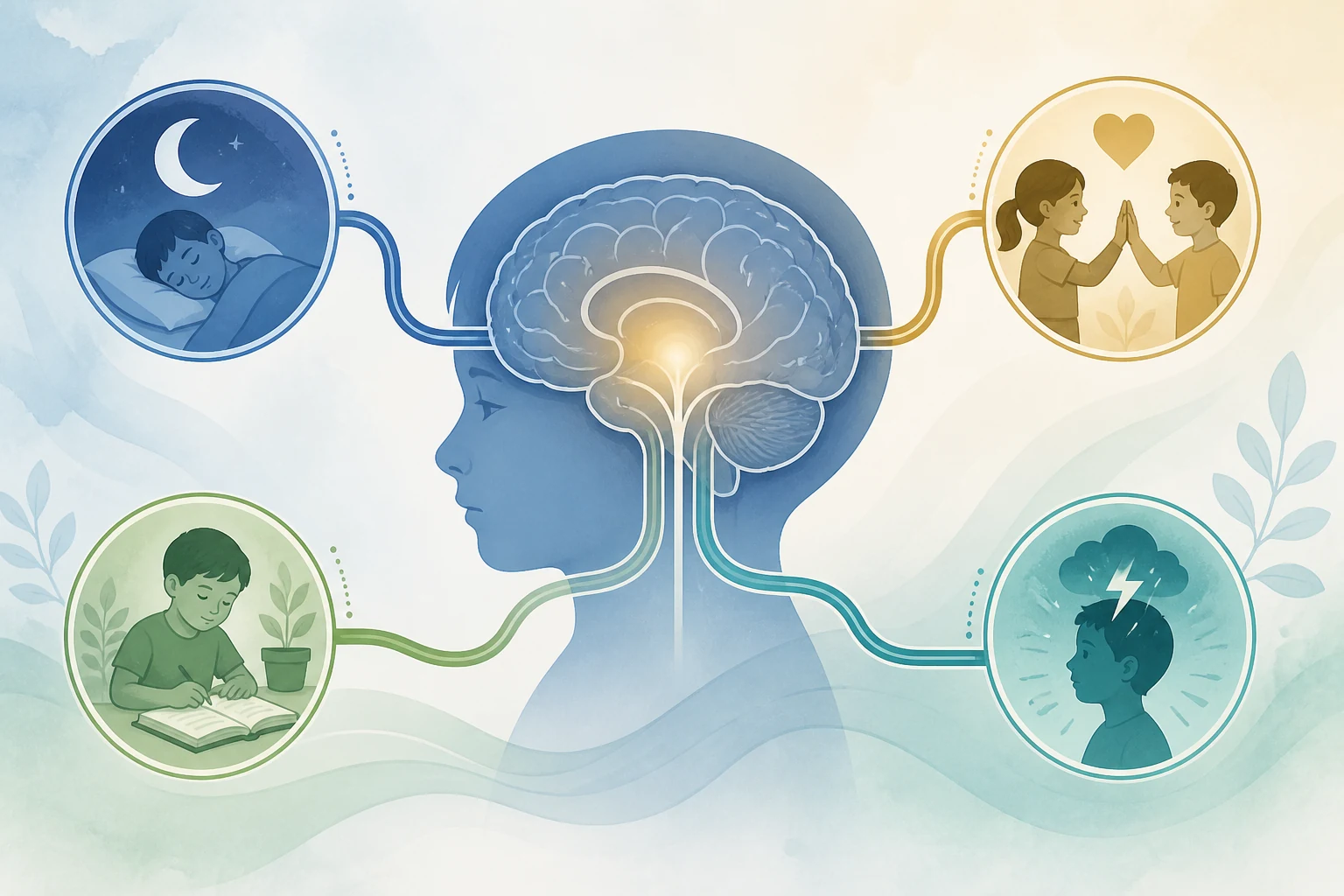
For adults, this can show up as feeling easily overwhelmed, having trouble trusting calm situations, reacting strongly to conflict, disconnecting from emotions, or struggling with boundaries. These are not proof that a person has a specific condition. They are possible patterns that may make more sense when viewed through a trauma-informed lens.
It is also important to say the hopeful part plainly: brain development is not frozen in childhood. Supportive relationships, therapy, stable routines, sleep, movement, community, and safer environments can all help the nervous system learn new patterns over time.
What an ACE Questionnaire and Score Can Tell You
An adverse childhood experiences questionnaire usually asks whether certain events happened before age 18. A traditional ACE score counts how many categories apply, often from 0 to 10. For example, someone with four categories marked "yes" would have an ACE score of 4.
The score is best understood as a broad risk indicator. In population research, higher ACE scores are associated with higher risk for some mental health, physical health, relationship, and life-opportunity challenges. That does not mean a high ACE score predicts an individual future. It also does not mean a low score proves everything was easy, safe, or unaffected.
A gentle ACE score framework can be useful when you want language for self-reflection or for a future conversation with a therapist, doctor, counselor, or other qualified professional. The most useful question is not only "What is my number?" but "What context does this number leave out?"
ACE Score Meaning Depends on Context
Two people can have the same ACE score and very different lives. One person may have had one intensely harmful experience. Another may have had several lower-intensity but chronic stressors. Protective factors also matter: a reliable adult, a safe school environment, a supportive friend, faith or community connection, access to counseling, or simply having one place where the child felt believed.
When you interpret an adverse childhood experience score, consider:
- timing: when the experience happened
- duration: whether it was isolated or repeated
- intensity: how threatening or overwhelming it felt
- support: whether someone noticed, protected, or helped
- current impact: whether it still affects relationships, sleep, mood, health, or daily choices
That context keeps the score from becoming too small for the story it is trying to summarize.
Lifelong Consequences Do Not Mean a Fixed Fate
Many searches use phrases such as "adverse childhood experiences and the lifelong consequences of trauma." That language reflects a real concern: childhood adversity is linked with increased risk for later challenges, including chronic stress patterns, health risk behaviors, relationship difficulty, depression symptoms, anxiety symptoms, substance use risk, and some chronic health conditions.
But the word "consequences" can sound more final than the evidence supports. ACEs are associated with risk, not certainty. Many people with multiple childhood adverse events build meaningful relationships, improve health patterns, develop strong self-awareness, and create safer lives. Resilience is not pretending the past did not matter. It is the process of adding support, skills, safety, and choice where possible.
One helpful shift is to move from "What is wrong with me?" to "What happened, what helped me survive, and what support would help now?" That question respects the reality of early adversity while leaving room for growth.

A Gentle Way to Reflect on Childhood Adverse Events
If you are exploring childhood adverse events for yourself, go slowly. It is common to feel curious, sad, numb, skeptical, or uncertain. You do not have to remember everything at once or force a clean explanation.
Try this brief reflection:
- Write down which ACE categories seem relevant, using plain language.
- Note what was missing as well as what happened, such as safety, attention, food, rest, affection, or consistency.
- Name one current pattern that might be connected, without treating it as your whole identity.
- Name one protective factor you had then or have now.
- Choose one low-pressure next step, such as reading more, resting, journaling, talking with a trusted person, or preparing questions for a professional.
This is where an ACE test or ACE quiz can support reflection, as long as it is used carefully. A questionnaire can organize information. It cannot tell you who you are, what you deserve, or what your future must look like.
Bringing Childhood Adverse Events Into Supportive Next Steps
The most useful next step depends on what you are trying to understand. If you want a simple starting point, an ACEs self-exploration space can help you review the classic questions, see a basic score, and think about what the score may mean within limits. If the topic brings up strong distress, ongoing safety concerns, self-harm thoughts, substance use concerns, or memories that feel unmanageable, it is wise to involve a qualified mental health or medical professional.

You might bring a short note to a therapist, counselor, doctor, or support worker that says: "I am learning about adverse childhood experiences, and I wonder whether some early stress is connected to patterns I notice now." That kind of sentence opens a conversation without requiring you to share everything immediately.
For many people, the aim is not to dig up the past for its own sake. The aim is to understand patterns with compassion, reduce shame, and choose safer supports in the present.
FAQ
What are the 10 adverse childhood events?
The classic ACE categories include emotional abuse, physical abuse, sexual abuse, emotional neglect, physical neglect, household substance misuse, household mental health problems, violence toward a caregiver, parental separation or divorce, and incarceration of a household member. Some modern trauma-informed discussions include additional adversities, such as bullying, discrimination, food insecurity, homelessness, and community violence.
What is an adverse childhood experiences questionnaire?
An adverse childhood experiences questionnaire is a screening-style set of questions about adversity before age 18. It usually asks whether certain experiences happened, then adds the number of categories marked "yes." It is meant to support education and reflection, not to replace professional care or capture every detail of a person's history.
What does an ACE score mean?
An ACE score shows how many listed adversity categories apply to someone's childhood history. A higher score is associated with higher population-level risk for some later health and well-being challenges. It does not predict one individual life, explain every symptom, or measure resilience, support, timing, or severity.
How do adverse childhood experiences impact brain development?
Repeated or intense adversity can keep a child's stress-response system highly activated. Without enough safety and support, that stress may affect attention, learning, emotional regulation, sleep, and later responses to conflict or uncertainty. Supportive relationships and safer environments can help buffer these effects.
What are common causes of childhood trauma?
Common causes can include abuse, neglect, witnessing violence, caregiver substance use, caregiver mental health struggles, unstable housing, discrimination, bullying, sudden loss, and chronic family conflict. What matters is not only the event, but how threatening it felt, how long it lasted, and whether the child had protection and support.
What are signs of repressed childhood trauma in adults?
People use this phrase when they notice adult patterns they cannot fully explain, such as strong reactions to conflict, emotional numbness, difficulty trusting others, sleep disruption, shame, or avoidance of certain memories. These signs can have many causes, so it is better to treat them as reasons for gentle exploration or professional support rather than as proof of one explanation.
What is childhood toxic stress syndrome?
People often use this phrase to describe the effects of strong, frequent, or prolonged childhood stress without enough supportive protection. Toxic stress is not simply everyday stress. It refers to stress that can affect the developing brain, immune system, hormones, and stress-response patterns, especially when safety and stable caregiving are missing.