ACE Test Pros and Cons: A Clinician’s Guide to Trauma Screening
The ACE test has revolutionized our understanding of how childhood experiences shape adult health. By quantifying childhood trauma, this tool has bridged the gap between early life events and chronic medical conditions. But for many practitioners, a vital question remains: Is the ACE test suitable for all populations and clinical settings?
As mental health professionals increasingly incorporate trauma screening into their daily practice, understanding both the strengths and limitations of this tool is essential. This clinically-grounded analysis examines the evidence behind ACE screening. Our goal is to help you implement the test ethically while maximizing benefits for your clients. Practitioners can begin the confidential ACE screening to evaluate its utility as a primary assessment tool.

Understanding the ACE Test's Scientific Foundation
To use any clinical tool effectively, one must first understand its roots. The Adverse Childhood Experiences (ACE) framework is more than just a questionnaire; it is a body of research that changed the way we view public health and human development.
The Landmark CDC-Kaiser Permanente Study Origins
The ACE study began in the mid-1990s as a collaboration between the Centers for Disease Control and Prevention (CDC) and Kaiser Permanente’s Health Appraisal Clinic in San Diego. It involved over 17,000 participants who provided detailed information about their childhood experiences and current health status. This was one of the largest investigations ever conducted to assess the associations between childhood maltreatment and later-life health.
The original study identified ten trauma categories. These cover direct abuse (physical, emotional, and sexual), neglect (physical and emotional), and household dysfunction—from witnessing domestic violence to familial substance abuse. By using a simple 10-point scale, the researchers created a way to quantify what was once considered "unmeasurable" personal history.
How ACE Scores Predict Health Outcomes Across the Lifespan
The most significant finding of the study was the "dose-response" relationship. As a person’s ACE score increases, the risk for negative health outcomes also rises. For example, individuals with an ACE score of four or more are significantly more likely to develop chronic obstructive pulmonary disease (COPD) or heart disease later in life.
The predictive power of the ACE score extends beyond physical health. It is a strong indicator of potential challenges with mental health, substance use, and social stability. When patients review their personal ACE score, they and their healthcare providers can begin to connect the dots between the past and current well-being. This understanding is the first step in moving from "What is wrong with you?" to "What happened to you?"
Current Clinical Applications and Research Updates
Today, the ACE test is used worldwide in diverse settings, from pediatric offices to substance abuse recovery centers. Modern research has expanded the original scope to include "Expanded ACEs." These include experiences like community violence, racism, and living in the foster care system.
Clinicians now use ACE scores to flag high-risk patients earlier. Trauma screenings let providers deploy preventive care and trauma-informed interventions proactively. To integrate this into your practice, you can access the clinically validated ACE assessment on our platform.
ACE Test Limitations: Ethical and Cultural Considerations
While the ACE test is a powerful tool, it is not without flaws. A responsible clinician must recognize that a score of 10 is not a diagnosis, nor is a score of 0 a guarantee of perfect health. Understanding the "cons" of the test is just as important as knowing its "pros."
Cultural Bias in ACE Assessment and Its Clinical Implications
One of the most frequent critiques of the original ACE study is its demographic focus. The initial 17,000 participants were mostly white, middle-class, and college-educated individuals with health insurance. This means the original 10 questions may not fully capture the trauma experienced by people in marginalized communities.
Mitigating Cultural Bias in Screening
For many populations, systemic issues like poverty, food insecurity, and discrimination are more impactful than original household factors. If a clinician relies solely on the standard 10 questions, they may miss significant stressors. This cultural bias can lead to an incomplete picture of a client’s reality. We recommend using our digital ACE tool as a starting point for deeper clinical inquiry.

False Negatives and Incomplete Trauma Representation
The ACE test is a screening tool, not a comprehensive psychological evaluation. Because it only tracks ten specific types of adversity, many other traumatic events are left out. For instance, a person might score a 0 on the ACE test but still have experienced the death of a parent, severe bullying, or a life-threatening natural disaster.
In these cases, the test results may suggest a "low risk" that does not match the person's actual level of distress. This is known as a false negative. Clinicians must remember that the absence of these ten specific ACEs does not mean the absence of childhood trauma.
The Risk of Pathologizing Normal Human Experience
There is also a risk that a high ACE score can make a person feel "broken" or destined for failure. This is often called pathologizing. If practitioners focus too much on the score and not enough on the person's strengths, they may inadvertently cause harm.
A high score indicates risk, not a certainty of disease. It is vital to frame the results in a way that emphasizes the brain's ability to heal and the importance of resilience. We encourage users to examine the results as a map for growth rather than a life sentence.
Best Practices for Clinical ACE Assessment
To avoid common pitfalls, professionals should follow established best practices. Implementing the ACE test requires more than just handing a patient a piece of paper; it requires a trauma-informed environment.
Creating Culturally Competent Screening Protocols
Clinicians should adapt their screening process to the community they serve. This might mean adding questions about community-level stressors or using a translated version of the test for non-English speakers. Our platform supports over 15 languages to ensure that the secure ACE assessment test remains accessible to a global audience.
Furthermore, practitioners should perform screenings in a safe, private space. The practitioner must explain why the questions are being asked and how the information will be used to improve the client's care.
Complementary Assessment Tools for Comprehensive Evaluation
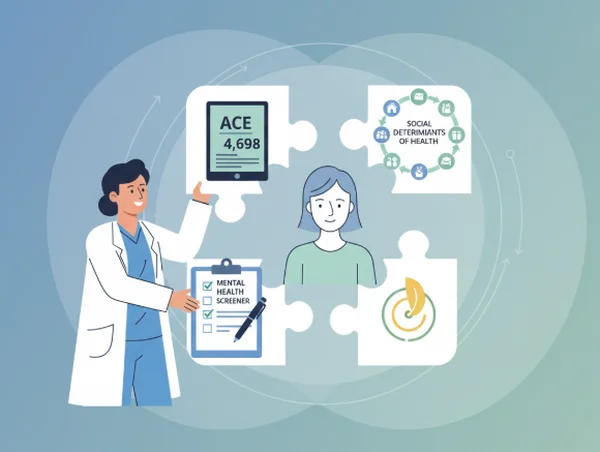
No single test can capture the complexity of a human life. To provide the best care, use the ACE test alongside other assessments:
- Resilience Scales: To identify the positive factors that protect a person from the effects of trauma.
- Mental Health Screeners: Like the PHQ-9 for depression or the GAD-7 for anxiety.
- Social Determinants of Health (SDoH) Surveys: To assess current living conditions and needs.
Using a screening tool as part of a larger toolkit ensures that you are treating the whole person, not just a number.
Informed Consent and Client Preparation Strategies
Before asking a client to revisit childhood trauma, obtain informed consent. Clients should know that they have the right to skip any question that makes them feel uncomfortable. They should also understand that the test might bring up difficult emotions.
Preparation is key. Providing resources for grounding techniques or immediate support after the test can prevent re-traumatization. Practitioners should always have a plan for discussing results in a supportive and empowering way.
Clinical Case Studies in ACE Screening
Real-world examples help illustrate how the ACE test functions in practice. These cases highlight the importance of looking beyond the score.
High ACE Scores and Unexpected Resilience Factors
Consider "Client A," who has an ACE score of 7. Statistically, this person is at high risk for many health issues. However, Client A grew up with a very supportive grandmother and a dedicated teacher who provided a "buffer" against the stress at home.
In this case, the high ACE score led to a conversation about resilience. The clinician highlighted Client A's internal strengths and existing support systems. This transformed a potentially discouraging score into a source of empowerment. You can examine the clinical screening tool to see how the questions facilitate these conversations.
Navigating ACE Scores in Diverse Cultural Contexts
"Client B" is an immigrant from a war-torn region. Their standard ACE score is only a 2. However, they spent years in a refugee camp and experienced significant xenophobia upon arriving in a new country.
By recognizing the limitations of the standard test, the clinician asked follow-up questions about community trauma. This allowed the provider to offer specific trauma-informed care that the standard 10-point test would have missed.
Using ACE Results to Guide Trauma-Informed Treatment Planning
For "Client C," who struggles with chronic pain and anxiety, a high ACE score was the "missing piece" of the puzzle. By understanding that their physical pain was linked to a history of childhood neglect, the medical team shifted their approach.
By integrating somatic therapy with mindfulness, Client C’s care team tackled the roots of their distress. This comprehensive plan addressed the primary causes of the physical and mental symptoms, leading to better long-term outcomes.
Beyond the Numbers: Implementing ACE Results Responsibly
While the ACE test remains pivotal in trauma-informed care, professionals must contextualize results within broader client narratives. It provides a scientific language for talking about the long-term impact of childhood adversity. However, it is only a starting point.
To use the ACE test responsibly, professionals must:
- Acknowledge its scientific value while remaining aware of its cultural and structural limitations.
- Use it as part of a larger, holistic assessment that includes resilience and current social factors.
- Frame the results in a way that promotes hope, healing, and personal growth.
Whether you are a professional or an individual, we invite you to access our free assessment resource today. By taking the first step to understand the past, we can build a healthier, more resilient future.
The Takeaway
Is the ACE test culturally appropriate for all populations?
While the core concepts are universal, the original 10 questions were based on a specific demographic. Practitioners should use the test alongside culturally specific questions to ensure a fair and accurate assessment of all trauma types.
Can the ACE test be used as a diagnostic tool for trauma disorders?
No, the ACE test is a screening tool, not a diagnostic one. It identifies risk factors but cannot diagnose conditions like PTSD or depression. It should always be followed by a professional clinical interview.
What are the ethical considerations when discussing ACE results with clients?
The primary ethical concerns are privacy, informed consent, and the risk of re-traumatization. Clinicians must ensure the environment is safe and that the client feels in control of the process throughout the discussion.
How do I handle clients who score high on multiple ACE categories?
Meet clients with high scores with compassion and a focus on resilience. Provide them with immediate resources for support. Work together to develop a trauma-informed care plan that prioritizes their current stability and long-term healing.
What complementary tools should I use alongside ACE screening?
We highly recommend using resilience scales, general mental health screenings, and assessments for social determinants of health. This provides a balanced view of the client's risks and their protective factors.