ACE Score & Autoimmune Disease: The Science Behind the Link
The link between your childhood and your present-day health might be stronger than you realize. Have you ever wondered if difficult early life experiences could affect your physical health years later? Research increasingly shows that Adverse Childhood Experiences (ACEs) don't just impact mental well-being—they can fundamentally alter your body's defense systems. This may increase the risk of developing autoimmune conditions down the road.
Understanding this connection is the first step toward proactive health management. In this guide, we'll explore the science linking high ACE scores to autoimmune diseases. We'll also look at how childhood trauma affects your immune system and discuss what you can do to support your long-term health. Learning your own ACE score can be a powerful first step, and our free, confidential ACE test is here to help you begin that journey.

Understanding the ACE-Autoimmune Disease Connection
The relationship between what we endure as children and how our bodies function as adults is a key area of modern health research. Scientists have discovered that prolonged stress in childhood can leave a lasting mark on our biology. This isn't just about memories; it's about physical changes that can influence health outcomes for decades.
For many, this connection explains health issues that previously seemed random. By understanding the biological pathways, we can move from confusion to clarity. The science shows that early adversity can disrupt the very systems designed to protect us, making the body more susceptible to turning against itself. This is the core of the ACE-autoimmune disease link.
How Childhood Trauma Rewires Your Immune System
Your immune system is your body's security force. It's designed to identify and fight off threats like bacteria and viruses. However, severe or chronic stress during childhood—such as the experiences measured by the ACE test—can reprogram this system. This happens through a process involving your stress response system.
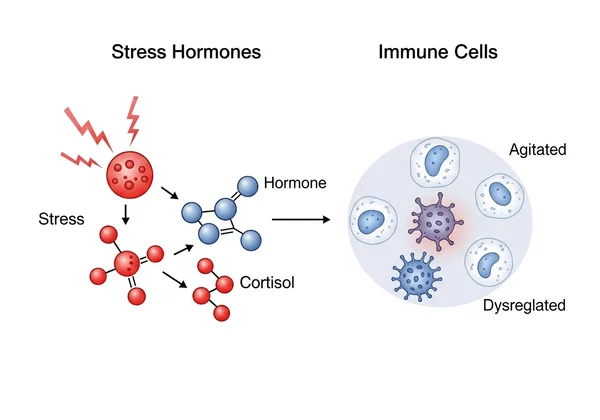
When you face a threat, your body releases stress hormones like cortisol. This is a normal and healthy 'fight-or-flight' response. However, when a child lives in a constant state of high alert, this system never gets to rest. The continuous flood of stress hormones can cause long-term changes in immune cell function. Your immune system can become dysregulated, meaning it may overreact to minor threats or, in the case of autoimmunity, fail to recognize your own body's tissues as "self."
The Science Behind ACE Score and Inflammation
A key player in the link between a high ACE score and inflammation is chronic, low-grade inflammation. Inflammation is a natural part of the immune response—it’s what causes the redness and swelling around a cut. But when it becomes chronic, it's like a fire that never goes out, slowly damaging tissues and organs over time.
Research, including the foundational ACE Study, has shown a dose-response relationship: the higher your ACE score, the greater your risk for chronic inflammation as an adult. For example, a score of 4 or more is often linked to a significant increase in these risks. This persistent inflammation is a known trigger and accelerator for many autoimmune diseases. It creates an environment where a confused immune system is more likely to launch an attack on healthy parts of the body, such as the joints, thyroid, or gut lining.
ACEs and Specific Autoimmune Conditions
While the general link is clear, research has also begun to connect ACEs with the risk of specific autoimmune diseases. This helps individuals and healthcare providers better understand personal risk factors and focus on targeted preventive strategies. Knowing your personal history is a vital piece of the puzzle.
By examining large-scale studies, we can see patterns emerge. Certain conditions appear more frequently in adults who report a higher number of adverse childhood experiences. This information is not meant to be deterministic, but rather to empower you with knowledge about your health profile.
ACE Score and Rheumatoid Arthritis Studies
Rheumatoid arthritis (RA) is an autoimmune disease where the immune system primarily attacks the joints, causing pain, inflammation, and stiffness. Several studies have explored the connection between childhood adversity and the risk of developing RA later in life.
For example, a significant body of research has found that women who experienced trauma in childhood had a substantially higher risk of developing RA. The chronic stress and resulting inflammation are thought to be major contributing factors. Knowing where you stand, especially if you have an elevated ACE score, provides crucial context. Understanding your personal history through tools like an ACE score test can help you and your doctor better manage your joint health.
The ACE-IBD Connection: Crohn's and Ulcerative Colitis
Inflammatory Bowel Disease (IBD), which includes Crohn's disease and ulcerative colitis, is another area where the ACE connection is strong. These conditions involve chronic inflammation of the digestive tract. The gut is sometimes called the "second brain" because it has a complex nervous system and is highly sensitive to stress.
Studies have shown that individuals with IBD are more likely to have a history of childhood adversity. The theory is that early life stress can alter the gut microbiome (the community of bacteria in your intestines) and increase intestinal permeability, or "leaky gut." This allows substances to pass into the bloodstream that trigger an inflammatory immune response, contributing to the onset or flare-ups of IBD. Knowing your ACE score helps contextualize these risks and encourages proactive gut health strategies.
Breaking the Cycle: Resilience Strategies for ACE Survivors
Learning about the link between ACEs and autoimmune disease can feel overwhelming, but it's crucial to remember one thing: your ACE score is not your destiny. It is a tool for understanding, not a life sentence. The human body and mind have a remarkable capacity for healing and building resilience.
Focusing on solutions is the most empowering step you can take. By adopting specific strategies, you can actively work to calm your stress response system, reduce inflammation, and support your overall well-being. This journey begins with the awareness that change is possible, no matter what you've been through.

Lifestyle Changes That Reduce Inflammation Risk
You have the power to influence your body's inflammatory state through daily choices. These simple, evidence-based lifestyle changes can make a significant difference in managing your autoimmune risk.
- Anti-Inflammatory Diet: Focus on whole foods like fruits, vegetables, fatty fish (rich in omega-3s), nuts, and seeds. Try to limit processed foods, sugar, and unhealthy fats, which are known to promote inflammation.
- Regular, Gentle Movement: You don't need to run a marathon. Activities like walking, yoga, swimming, and tai chi can lower stress hormones and reduce inflammatory markers. Find something you enjoy and do it consistently.
- Prioritize Sleep: Sleep is when your body repairs itself. Aim for 7-9 hours of quality sleep per night. A consistent sleep schedule and a relaxing bedtime routine can help regulate your immune system.
- Mindfulness and Stress Reduction: Practices like meditation, deep breathing exercises, and spending time in nature can directly calm your nervous system, pulling you out of the chronic "fight-or-flight" state.
Building Biological Resilience After Childhood Trauma
Beyond general lifestyle changes, you can also take steps to build what experts call "biological resilience." This means actively helping your body's systems recover and regulate themselves after the effects of long-term stress.
One of the most powerful ways to do this is by fostering safe and supportive relationships. Positive social connections can buffer the effects of stress and have been shown to have a direct, positive impact on immune function. Additionally, working with a trauma-informed therapist can provide you with tools to process past experiences, which helps regulate the stress response system at its source. Understanding your past is a key part of this process, which is why we encourage you to start your test and gain that foundational knowledge.
Taking Control of Your Health Journey
Science has uncovered something important: the link between tough childhood experiences and autoimmune risk is both real and significant. Chronic stress in our formative years can rewire our immune systems, making us vulnerable to chronic inflammation and autoimmunity later in life. But this knowledge isn't meant to frighten you—it's meant to empower you.
Learning where you stand with your ACE score is your first step toward taking control of your health story. It provides a framework for understanding your personal risk factors and empowers you to have more informed conversations with your healthcare providers. More importantly, it highlights the importance of strategies that build resilience, reduce inflammation, and promote healing.
Your past does not have to define your future health. By making conscious lifestyle choices, seeking support, and understanding your own story, you can break the cycle. Ready to take that first step toward greater self-awareness? Discover your ACE score with our free, confidential, and insightful online tool today.

The Takeaway
Can a high ACE score cause autoimmune disease?
A high ACE score does not directly cause an autoimmune disease, but it is a significant risk factor. It increases the biological vulnerability to developing one, especially when combined with other genetic or environmental factors. If you're curious about your own risk factors, you can get your score in just a few minutes.
What is the connection between childhood trauma and inflammation?
Childhood trauma can activate the body's stress response system for prolonged periods. This leads to an overproduction of stress hormones like cortisol, which, over time, disrupts the normal function of the immune system. This disruption often results in a state of chronic, low-grade inflammation, a key biological pathway that links early adversity to a wide range of adult health problems, including autoimmune diseases.
Can healing from childhood trauma reduce my autoimmune risk?
Yes, absolutely. While we cannot change the past, we can change how it impacts our present and future biology. Engaging in healing practices—such as therapy, mindfulness, building healthy relationships, and adopting an anti-inflammatory lifestyle—can help regulate your stress response and calm your immune system. These actions can reduce chronic inflammation and lower your overall autoimmune risk, demonstrating that resilience is a powerful force for health.